The Importance of Fire Risk Assessments in Ensuring Safety and Compliance

Fire safety is a critical concern for any building where people live, work, or visit. A fire can cause devastating damage, endanger lives, and lead to costly legal consequences. One of the most effective ways to prevent such outcomes is through a thorough fire risk assessment (FRA). This process goes beyond mere paperwork; it is a practical tool for managing fire safety every day. Understanding what a fire risk assessment involves and why it matters can help building owners, managers, and occupants maintain a safer environment.

What Is a Fire Risk Assessment?
A fire risk assessment is a structured evaluation designed to identify fire hazards, assess the likelihood of a fire occurring, and estimate the potential consequences. It also determines what control measures are necessary to reduce the risk to an acceptable level. Unlike a static document, an FRA is a live management tool that supports ongoing fire safety practices within a building and underpins how fire safety is delivered day to day.
Under the Regulatory Reform (Fire Safety) Order 2005, Responsible Persons are required to ensure that a suitable and sufficient fire risk assessment is in place and kept up to date for non-domestic premises and the common parts of residential buildings. The assessment must reflect the building as it is currently used, not how it was originally designed.
The assessment covers several key areas:
Identification of fire hazards: This includes sources of ignition such as electrical equipment, fuel loads like flammable materials, and oxygen sources that can feed a fire.
People at risk: It considers all occupants, including residents, staff, visitors, and vulnerable individuals who may need extra assistance during an emergency.
Means of escape and evacuation: The assessment reviews escape routes, emergency exits, and evacuation plans/strategy to ensure they are adequate and accessible.
Fire detection and alarm systems: It checks the presence and functionality of smoke detectors, fire alarms, and warning arrangements.
Firefighting equipment: This includes fire extinguishers, hose reels, sprinkler systems, and other facilities.
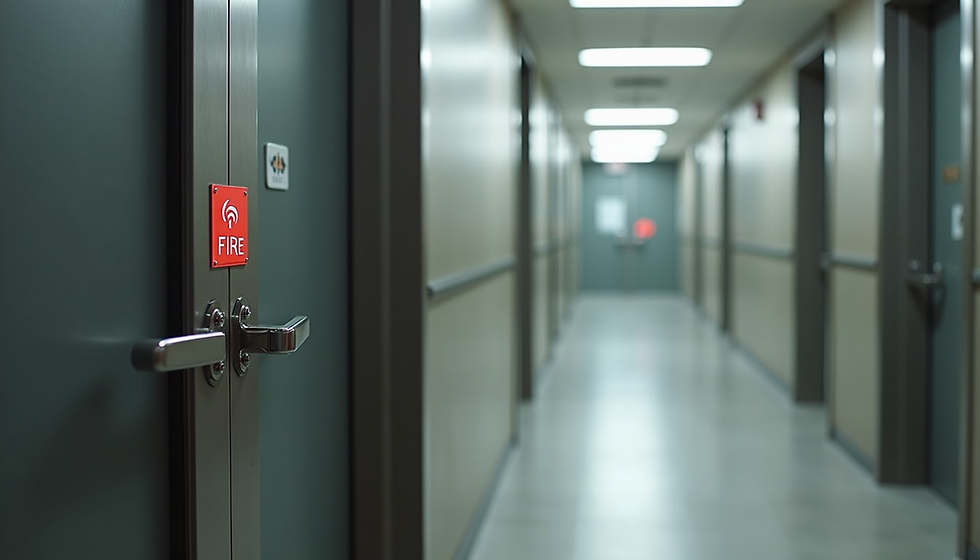
Passive fire protection: Elements such as fire doors and compartmentation that help contain fire and smoke are evaluated.
Fire safety management: The assessment examines maintenance schedules, staff training, recordkeeping, and overall fire safety policies.

By examining these areas, the FRA provides clear guidance on the risks present and the actions needed to manage them effectively, including how to prioritise and track them.
Why Fire Risk Assessments Matter
Fire risk assessments are not just legal requirements; they are essential for protecting lives and property. Here are some reasons why fire risk assessments are vital:
Preventing fires: Identifying hazards early enables control measures that reduce the risk of a fire starting.
Protecting occupants: Understanding who is at risk helps tailor evacuation plans and safety measures to protect everyone, including those with disabilities or special needs.
Ensuring compliance: Meeting legal requirements helps avoid fines, legal action, and potential closure of the premises.
Reducing damage: Effective fire safety management limits the spread of fire and smoke, thereby reducing property damage.
Supporting insurance claims: A documented FRA can support insurance claims by demonstrating that reasonable precautions were taken.
Reducing disruption: A risk-based approach helps avoid enforcement action, downtime, and reputational harm.
Where Fire Risk Assessments Are Required
Fire risk assessments apply to a wide range of buildings where people live, work, or visit. The level of detail depends on the building’s complexity and use—there is no one-size-fits-all approach.
They are required in:
Residential buildings: Blocks of flats and HMOs (common areas such as hallways and stairwells)
High-rise residential buildings and complex developments
Commercial premises: Offices, retail units, warehouses, factories, and similar workplaces
Housing association and local authority housing stock
Care homes, supported living, and healthcare environments
Public buildings: Schools, hospitals, hotels, leisure centres, places of assembly, and education settings
Industrial premises and mixed-use developments
Each type of building presents unique challenges, so the assessment must be specific to the building’s layout, occupancy, and management practices.
Residential Buildings and HMOs
In HMOs and low-rise residential buildings, fire risk assessments focus on ensuring that occupants can escape safely and that the spread of fire is limited. These buildings often present issues due to fragmented ownership, tenant behaviour, and poor ongoing maintenance.
Common challenges include:
Fire doors that are damaged, missing components, or non-compliant
Inadequate fire detection or alarm coverage within common areas
Escape routes bare eing obstructed by storage or waste
Lack of routine inspection and maintenance of fire safety measures
Alterations to layouts or services without fire safety consideration.
These risks often develop gradually and can go unnoticed without a structured assessment and follow-up.
High-Rise Residential Buildings
High-rise buildings require a significantly more detailed and risk-based approach. These buildings rely heavily on design features such as compartmentation, fire-resisting construction, and specific evacuation strategies. The failure of any one of these elements can have serious consequences.
Fire risk assessments must consider:
The suitability of the evacuation strategy (e.g., stay-put or simultaneous evacuation)
The condition and integrity of compartmentation throughout the building
The performance and maintenance of smoke control systems
Firefighting access, including dry/wet risers and fire service facilities
The presence of vulnerable residents and evacuation planning requirements.
In these environments, assumptions are dangerous. A generic or poorly scoped FRA can lead to incorrect conclusions and ineffective controls.
Housing Associations and Managed Stock
Housing associations and managing agents are responsible for large portfolios, often consisting of a wide range of building types. The key challenge is not simply carrying out fire risk assessments, but ensuring that the findings are acted upon consistently across all properties.
Effective fire risk management requires:
A consistent methodology for assessments across the portfolio
Risk-based prioritisation of findings and remedial works
Robust systems for tracking actions through to completion
Clear governance and oversight of fire safety performance
Coordination between internal teams, contractors, and consultants.
Without structured oversight, FRAs can become isolated reports, and recurring issues can persist across multiple buildings.
Commercial Premises
Commercial environments rely on fire risk assessments to ensure that staff, customers, and visitors can evacuate safely and that fire safety measures are appropriate for the risks present. These buildings often fail due to poor management rather than a lack of systems.
Fire risk assessments in commercial settings focus on:
Maintaining clear and unobstructed escape routes
Ensuring fire detection and alarm systems are appropriate and functional
Providing adequate emergency lighting and signage
Ensuring staff are trained and understand emergency procedures
Maintaining fire safety systems through regular inspection and servicing.
Care Homes and High-Risk Occupancies
Care homes and supported living environments present some of the highest fire risks due to the dependency and vulnerability of occupants. These buildings require a more detailed assessment that reflects how care is delivered.
Fire risk assessments must account for:
Assisted evacuation strategies and Personal Emergency Evacuation Plans (PEEPs)
Staff numbers, training, and response capability
Evacuation time compared to the likely fire development
The mobility and dependency levels of residents
Night-time conditions where staffing levels are reduced.
In these environments, fire safety is directly linked to operational reality. A generic FRA is not sufficient and can result in unsafe evacuation arrangements.
Who Is Responsible?
The Responsible Person under the Regulatory Reform (Fire Safety) Order 2005 has a legal duty to ensure that a suitable and sufficient fire risk assessment is carried out and kept under review.
This typically includes:
Employers in control of workplaces
Building owners and freeholders
Landlords of residential properties
Managing agents acting on behalf of owners
Housing providers and local authorities
Any person with control over part or all of the premises
This duty cannot be delegated. A competent person can be appointed to carry out the assessment, but the Responsible Person remains accountable for ensuring risks are identified and managed.
How to Conduct a Fire Risk Assessment
Conducting a fire risk assessment involves several steps that Responsible Persons or appointed fire safety professionals should follow:
Gather information: Collect details about the building’s layout, occupancy, fire safety equipment, and previous incidents.
Identify fire hazards: Look for ignition sources, combustible materials, and oxygen supplies.
Evaluate risks: Consider how likely a fire is to start and what harm it could cause.
Identify people at risk: Note vulnerable occupants and how they might be affected.
Assess existing controls: Review fire alarms, extinguishers, escape routes, and fire doors.
Decide on additional measures: Determine what improvements or changes are needed.
Record findings: Document the assessment clearly, including actions to be taken.
Review regularly: Update the assessment whenever there are changes to the building or its use, or at least annually.
Practical Examples of Fire Risk Assessment Benefits
In a block of flats, an FRA might identify that some fire doors are damaged or propped open, which compromises compartmentation. Replacing or repairing these doors can prevent fire and smoke from spreading between flats.
In a retail store, the assessment could reveal that emergency exit signs are not visible due to poor lighting. Installing brighter signs improves evacuation safety.
In a small office, the FRA might find that staff are not trained in using fire extinguishers. Providing training increases the likelihood of quickly controlling small fires
In a hospital, the assessment ensures that evacuation plans account for patients who cannot move independently and require specialised equipment and staff support.
What Happens Without a Fire Risk Assessment
Operating without a suitable fire risk assessment removes any structured understanding of fire risk within a building. In practice, this results in unmanaged hazards and a reactive approach to safety.
Common outcomes include:
Fire doors are not functioning correctly or are being removed entirely
Escape routes are becoming obstructed or unusable
Fire detection systems that are inadequate or poorly maintained
Compartmentation breaches allow fire and smoke to spread
No clearly defined evacuation strategy
Staff and residents lack awareness of emergency procedures
Fire safety issues not being identified, recorded, or prioritised
These failures are regularly found in buildings where fire risk is not actively managed.
Legal and Enforcement Risk
Failure to carry out a suitable and sufficient fire risk assessment is a breach of the Regulatory Reform (Fire Safety) Order 2005 and exposes Responsible Persons to enforcement action.
This can result in:
Enforcement notices requiring improvements
Prohibition notices restricting or preventing the use of the building
Prosecution for serious breaches
Significant financial penalties
Imprisonment in severe cases.
Beyond legal consequences, there is reputational damage, loss of trust among residents or staff, and potential impacts on insurance and operational continuity.
Maintaining Fire Safety After the Assessment
A fire risk assessment is only effective if its recommendations are acted upon and maintained.
This means:
Regular maintenance: Fire alarms, extinguishers, and emergency lighting must be checked and serviced.
Staff training: Employees should know fire procedures and how to use firefighting equipment.
Clear escape routes: Corridors and exits must remain unobstructed at all times.
Record keeping: Logs of inspections, drills, and maintenance help track compliance.
Continuous review: Changes in building use or occupancy require reassessment.
Most buildings do not fail because an FRA has not been completed—they fail because findings are not implemented. Clear ownership, tracking, and timely remedial works are what turn an assessment into real risk reduction.

Final Thought
Fire risk assessments are not paperwork—they are a structured process for understanding how fire risk exists within a building and how it should be managed. They must reflect the building as it is used, not how it was designed, and must be actively maintained over time.
A fire risk assessment should:
Be suitable and specific to the building
It should be carried out by a competent person
Be clearly written and risk-based
Be reviewed when circumstances change
It is actively used to manage fire safety
If you need support, First Response Safety Group Ltd (FRSG) can help you put the right arrangements in place and carry out tailored fire risk assessments for your business or property, aligned with how the premises are actually used and managed—providing clear, prioritised actions to help you manage risk and demonstrate compliance.
Done properly, it protects life and provides a clear framework for compliance. Done poorly—or not at all—it leaves both people and organisations exposed to avoidable and unmanaged risk.
Author: Sheldon Russell-Priest MiFSM


Comments